What to Do When Your Child Says 'I Hate You'
They do not mean it. But it still stings.
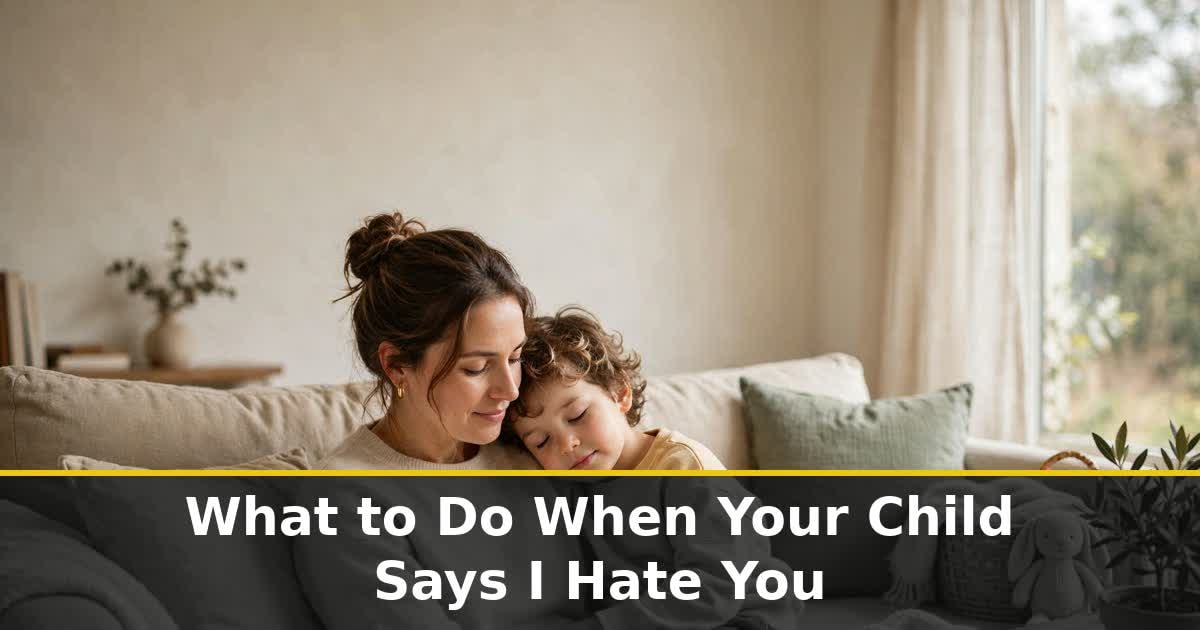
They do not mean it. But it still stings.
If you have raised kids for more than about five minutes, you have probably heard some version of it — usually at full volume, usually right after you said no to something, held a boundary, or asked them to do the thing they did not want to do.
"I hate you!"
It lands hard. Even when you know, logically, that your child does not actually hate you, your heart does not get that memo in the moment. And the temptation is to fire right back — louder, sharper, with all the hurt dressed up as authority.
Here is what we have learned in a house with eight kids: when a child says "I hate you," they are really saying, "I am overwhelmed and I do not have the words for what I am feeling."
What Those Words Actually Mean
Little kids — and honestly, bigger kids too — do not yet have a big emotional vocabulary. They know happy, sad, mad. When the feelings get bigger than those words, they reach for the biggest, strongest phrase they know. "I hate you" is often just "This feels too big and I do not know what to do with it."
That does not make it okay to say. But it changes how you hear it. You are not listening to a verdict on you as a parent. You are listening to a child who is flooded — the same kind of moment we talk about in how to talk to your kids about hard things, where staying present matters more than winning the moment.
The worst thing you can do is respond with equal intensity — matching their emotional temperature. If they are at a ten and you go to a ten, nobody learns anything except that big feelings get met with bigger feelings.
What to Say Instead
The best thing you can do is stay calm and say something like this: "I can see you are really upset. I love you even when you are angry at me. We can talk when you are ready."
Read that again, because every part of it is doing a job.
"I can see you are really upset" names what they could not name themselves.
"I love you even when you are angry at me" tells them your love is not up for a vote — it does not disappear when they are at their worst. That steady, secure love is a big part of what really predicts how your kids will turn out.
"We can talk when you are ready" keeps the door open without forcing a conversation while everyone is still flooded.
Then give them space. Walk away if you need to. The repair will come — often sooner than you expect, sometimes in the quiet of the bedtime routine that actually works, when a small voice finally says, "I'm sorry, Mama."
Something to Try Today
Next time those words fly — and in a real house, there will be a next time — try this three-step reset before you say anything else:
- Breathe first. One slow breath buys you the two seconds you need to choose your response instead of reacting.
- Say the sentence: "I can see you are really upset. I love you even when you are angry at me. We can talk when you are ready."
- Give space, then circle back later when things are calm and name it gently: "Those words hurt. When you feel that big, you can say, 'I'm really mad right now.' That I can help with."
No lecture in the heat of the moment. The teaching lands later, when their heart — and yours — can actually hear it.
Conversation Starter
When things are calm — at dinner, in the car, or before bed — ask this, and answer it first yourself: "When you get really, really mad, what does it feel like inside, and what helps you feel better?"
Go first with a true, simple answer. You are teaching them the words for the feeling, so next time the storm comes, they might reach for those words instead of the biggest one they know.
Your child does not hate you. They are overwhelmed, they are learning, and they are testing whether your love holds in the hardest moments. Show them it does. Stay calm, stay close, and trust that the repair will come.
Want a short parenting insight like this in your inbox every morning? Get the Parenting Minute at fulllifecrew.com/parenting-minute — one tip, one activity, one conversation starter a day, free.
Written by
Jareth & Deb
Content creator and writer sharing insights and stories.