Family Dinner Conversation Starters That Build Culture
Family dinner is one of the most researched predictors of how kids do — and it's not about the food. It's about the conversation, the ritual, and the sense that this family has a table where everyone belongs.
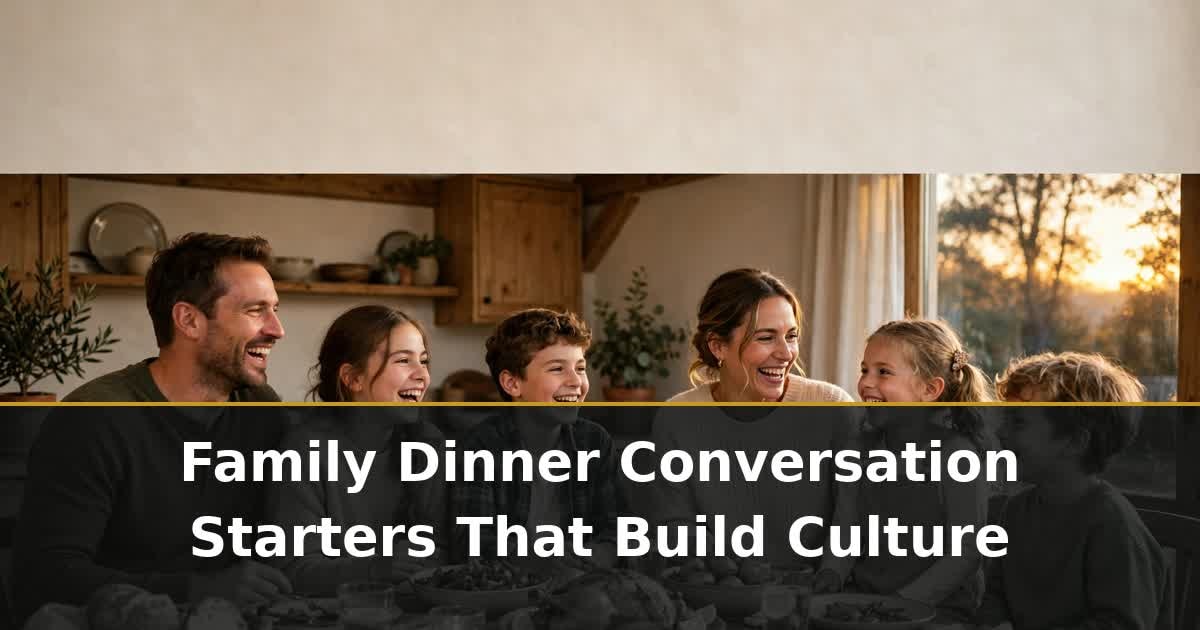
Some nights dinner at our house is beautiful. Everybody's talking, somebody's laughing so hard they can't finish the story, and nobody wants to leave the table.
Other nights it's "pass the salt," three conversations about who has practice and when, somebody asking what's for dessert before they've taken two bites, and plates in the sink before anyone actually said anything real.
Today's Parenting Minute put words to something we've felt for years: family dinner is one of the most researched predictors of how kids do — and it's not about the food.
It's about the conversation. The ritual. The sense that this family has a table, and everyone belongs at it.
What you talk about shapes who they become
That was the line in the Minute that stuck: What you talk about shapes who they become.
Think about what usually gets talked about at the table. Rides. Schedules. Grades. Whose turn it is to do dishes. All logistics. Necessary stuff — nobody's saying skip it — but if logistics is all there ever is, the table becomes a staff meeting with better snacks.
Kids are listening for more than information. They're learning what this family values by what this family talks about. Do we talk about people with kindness or with gossip? Do we talk about hard days honestly, or does everybody go quiet? Do we ask each other real questions and actually wait for the answers?
That's family culture. Not a mission statement on the wall — just the pattern of a thousand ordinary dinners.
It works the same way as the other hard conversations. We wrote before about how to talk to your kids about hard things — you don't wait for a crisis, you build the habit of talking in the small moments so the big moments have somewhere to land. The dinner table is where that habit gets built, one ordinary night at a time.
It doesn't have to be every night, and it doesn't have to be long
Let's be real: with eight kids, schedules collide. Some nights half the crew eats early before a game and the other half eats late after one. Some nights dinner is in shifts, standing at the counter.
That's fine. The research people quote about family dinner was never really about a perfect table setting seven nights a week. It's about a regular place where your kids know they'll be heard. Even two or three nights a week counts. Even twenty minutes counts, if the phones are down and somebody asks a real question.
Rituals like this are cousins to the ones that close the day. We wrote about the bedtime routine that actually works — predictable rhythms make kids feel safe. The dinner table is the same idea at the other end of the evening: same table, same people, and the quiet message that you belong here and your day matters to us.
And it doesn't stop mattering when they get older. It matters differently — we wrote about what your teenager actually needs from you, and a table where teens still get asked real questions, and still get listened to, is one of the few places that connection survives the eye-roll years.
Something to try today
Tonight, ask one question that is not about logistics. Just one. The Minute suggested three good ones:
- "What is something you are looking forward to?"
- "What is something that surprised you today?"
- "If you could change one thing about our family, what would it be?"
Then listen. Really listen.
That last part is the whole game. Don't correct the answer mid-sentence. Don't turn it into a teaching moment before they've finished. If a kid risks a real answer — especially that third question — and gets a lecture back, they'll give you logistics answers from then on. Ask, be quiet, ask one follow-up if it comes naturally, and let it be enough.
Start with the youngest if the table goes shy. Little kids will answer almost anything with total honesty, and once one person talks, the rest usually follow.
A conversation starter
At your next family dinner, ask: "What is one thing about our family that you hope never changes?"
Then go around the table. Answer it yourself, too — kids need to hear what you treasure about this family, out loud, not just assume it.
What you talk about shapes who they become. So talk about the good stuff, on purpose, around a table where everybody belongs. The food will be forgotten by Friday. The conversation won't.
Want a short parenting insight like this in your inbox every morning? Get the Parenting Minute at fulllifecrew.com/parenting-minute — one tip, one activity, one conversation starter a day, free.
Explore Topics
Written by
Jareth & Deb
Content creator and writer sharing insights and stories.